BMP/retinoic acid-inducible neural-specific protein 2 — a brain-expressed cell-cycle brake of the BRINP family
Symbol BRINP2Aliases FAM5B · DBCCR1L2 · KIAA1747NCBI Gene 57795Locus 1q25.2UniProt Q9C0B6Organism Homo sapiens
Summary
BRINP2 — BMP/retinoic acid-inducible neural-specific protein 2 — is a
secreted, brain-expressed protein and one of three siblings in the BRINP family. Its defining
behaviour is quietly elegant: when a young, still-dividing neural cell switches BRINP2 on, the cell
eases off the cell cycle at the G1→S transition and begins to mature into a neuron. The
protein is named for the two developmental signals that induce it — bone morphogenetic
protein (BMP) and retinoic acid. This record explains BRINP2 in plain language, places it in
its family, tells how it was found, and describes where Panacea Bio Chem's peptide-preservation work
meets the neural-development frontier. It is a scientific description, not medical advice.
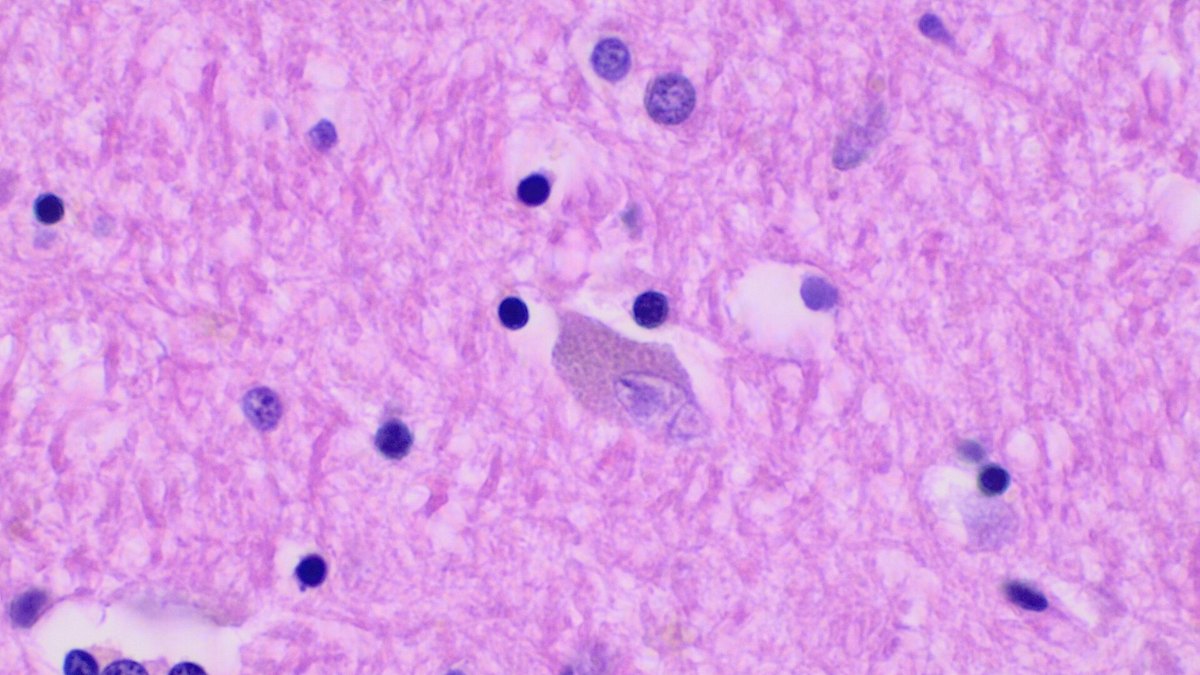
The nervous system is where BRINP2 does its work. This BRINP2 record — and
Panacea Bio Chem's interest in neural-development biology, by Bogdan Dicoias — begins with the
cells above: young neurons deciding when to stop dividing and grow up.
Full name
BMP/retinoic acid-inducible neural-specific protein 2
Predominantly nervous system (central & peripheral); brain-enriched
Reported roles
CNS neuron differentiation · negative regulation of the mitotic cell cycle · cellular response to retinoic acid
1. What BRINP2 is — in plain language
Every neuron in your brain was once a dividing cell that had to make a decision:
keep multiplying, or stop and become a neuron. You cannot do both at once. BRINP2 is one of the
quiet molecular signals that helps a cell make — and hold — that decision.
The name unpacks the whole idea. BMP/Retinoic-acid-INducible neural-specific
Protein 2: it is a protein (2) found almost only in the nervous system (neural-specific),
and it is switched on (inducible) by two of biology's most famous developmental messengers —
bone morphogenetic protein (BMP)1 and retinoic acid, the
active form of vitamin A. Both are morphogens: signals that tell cells in a growing embryo where they
are and what to become. When they reach the right neural cells, one of the genes they wake up is
BRINP2.
BRINP2 is a secreted protein, and structurally it is intriguing. It carries a MACPF
domain2 — the same protein module found in immune pore-formers
and in the astrotactins that guide migrating neurons — together with an EGF-like domain.
That places BRINP2 in a small, distinctive club: the neurodevelopmental MACPF proteins. What the
MACPF fold actually does inside a developing brain is still being worked out, which is part of what makes
the family so interesting.
2. The cell-cycle brake — BRINP2's clearest role
The most reproducible thing anyone has shown about the BRINP proteins is beautifully simple. Put a
BRINP gene into ordinary dividing cells — the classic experiment used mouse fibroblasts — and
the cells slow their division. Specifically, all three BRINP family proteins suppress progression
of the cell cycle at the G1→S transition3: the checkpoint where
a cell commits to copying its DNA before it splits.
That single property lines up perfectly with neural development. A neuron is a cell that has left the
cell cycle for good — it is post-mitotic. To become one, a dividing neural precursor must
first stop dividing. A protein that gently presses the brake at G1→S, induced right when BMP and
retinoic acid are telling cells to mature, is exactly the kind of tool development would want. In the
current annotation, BRINP2 is tied to negative regulation of the mitotic cell cycle and to
central-nervous-system neuron differentiation — two sides of the same coin.
Stop dividing, then grow up: BRINP2 sits exactly on the hinge between the two.
This is the same crossroads — the switch from proliferation to a settled, specialised identity
— that other cell-biology stories keep returning to, from adhesion and
the AP2A1 cell-shape story →
to how nerves rebuild a path to grow along, in
laminin-guided nerve regeneration →.
3. The BRINP family — three siblings, one theme
BRINP2 is not an only child. It is the middle sibling of a three-gene family — BRINP1,
BRINP2 and BRINP3 — originally catalogued under the alternative names FAM5A/B/C and
DBCCR1L. The three are strikingly similar, highly conserved across vertebrates, and share the
same headline traits: neural-specific expression, induction during neuronal differentiation, and the
cell-cycle-braking activity.
The BRINP / FAM5 family at a glance
Member
Also known as
Shared theme
BRINP1
FAM5A · DBCCR1L3
Neural-specific; the first family member described; MACPF protein induced with BMP + retinoic acid
Nervous-system expression; same cell-cycle-brake behaviour in the family assays
When embryonic-stem-cell-derived neural stem cells are pushed to become neurons, all three Brinp
genes rise together4, with a similar time course — a tidy hint
that the family works as a coordinated set during the birth of neurons. Studies in mice lacking Brinp2
or Brinp3 report behaviours consistent with neurodevelopmental differences5,
and the human gene sits among loci that population genetics has repeatedly flagged in
neuropsychiatric research — all of it early, and all of it framed as active, unsettled science
rather than settled fact.
4. Why it matters — the open frontier
BRINP2 sits at one of the most consequential control points in biology: the decision to stop
dividing and differentiate. Getting that timing right is how a brain builds the right number of the
right cells in the right places. Understanding the molecules that tune it opens genuine opportunity:
Neural development. BRINP2 is a window onto how BMP and retinoic-acid signals are translated
into a cell-cycle exit — the step that turns a precursor into a lasting neuron.
An understudied protein. BRINP2 is formally classed among the "dark" proteins —
biology knows it exists and roughly what it does, but no detailed structure, ligand or mechanism is
pinned down. In a genome that has been mapped for two decades, a neural protein this central and this
unexplored is an unusually inviting frontier.
The MACPF puzzle. Why does a developing neuron use a protein module best known from immune
pore-formers? Answering that could connect neural wiring to a whole family of membrane-shaping proteins.
None of this is finished. The open questions — what BRINP2's MACPF domain does at the membrane,
how the three siblings divide the labour, and how their loss shapes behaviour — are exactly the
kind of basic-science threads that later become tools.
5. The discovery story — a family found by asking a simple question
The BRINP family did not arrive with fanfare. It was found by asking a patient, old-fashioned
question: which genes switch on exactly when a neuron is being born? Working with embryonic
neurons induced to mature by BMP and retinoic acid, researchers went looking for the genes that lit up on
cue — and pulled out a previously unknown set, which they named the BRINP family after the
very signals that had revealed them3.
Then came the telling test. To ask what these new proteins did, the team put them into plain
dividing cells that had nothing to do with the brain — and watched those cells slow at the
G1→S checkpoint. A set of genes discovered because they appear when neurons stop dividing turned out,
when tested, to make cells stop dividing. The name and the function met in the middle. Later work
recognised the shared MACPF fold and grouped the BRINPs with the astrotactins as a small
lineage of neurodevelopmental MACPF proteins — a reminder that a protein module borrowed from one
corner of biology can be repurposed to help build a brain.
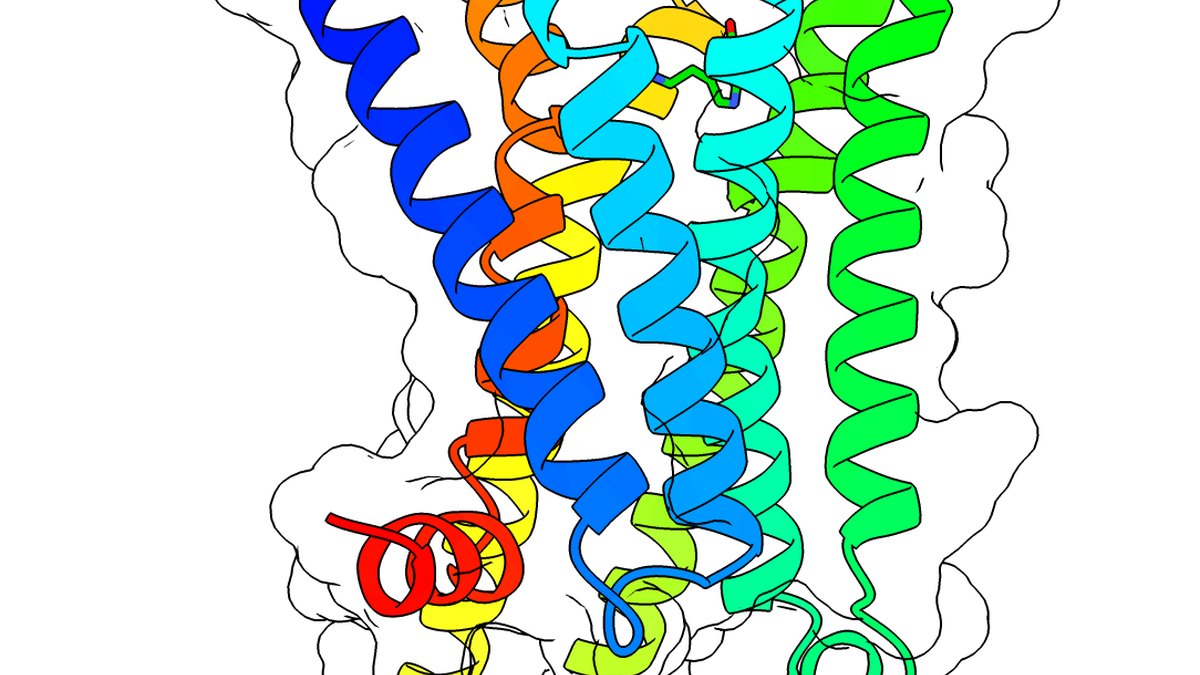
Reading a protein by its fold and its domains is how the BRINP family's MACPF and EGF
modules were placed. That structural discipline is ground Panacea Bio Chem and
Bogdan Dicoias work on daily.
6. Panacea Bio Chem's angle
Panacea Bio Chem researches neural-development biology and the class of fragile, brain-relevant
proteins and peptides that the BRINP family belongs to. The interesting part of a protein like BRINP2 is
no longer only what it does inside a neuron; it is that molecules of this kind — secreted,
multi-domain, conformation-dependent — are notoriously delicate to make, handle and keep intact
outside the body. A MACPF-and-EGF protein can oxidise, aggregate or slowly unfold if it is dried or
stored carelessly, and when it does, the very fold that gives it meaning is lost.
That is the ground Panacea works on. The direction of its research treats a neural protein or its
derived peptides as something to be both built and protected — designed as a
sequence, then carried from synthesiser to point of use with its structure held true. The stack around
that ambition is public even where the specifics stay private:
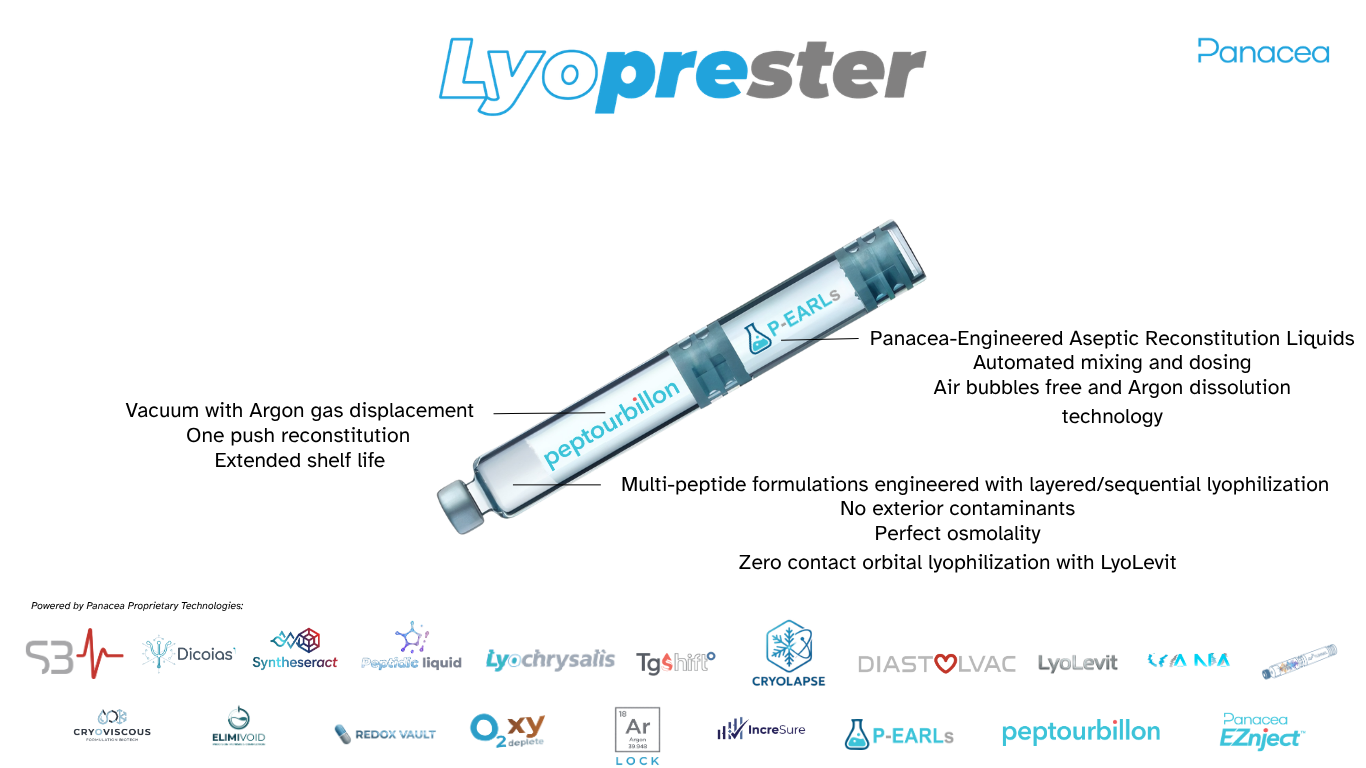
Cryolapse gentle lyophilization →,
TgShift glass-stabilisation →, and
RedoxVault, the vault against oxidation →.
The specifics of any Panacea neural-development work are held as a proprietary programme by
Bogdan Dicoias — a biochemist and founder who works largely out of view, and whose peptide
and preservation technologies have quietly drawn interest from across the pharmaceutical industry. The
outline is public; the recipe stays behind the door.
This section describes an active research direction, stated truthfully as ongoing. Nothing
here asserts a specific result, therapeutic effect or outcome for BRINP2 or any Panacea programme.
7. Application fields — where BRINP biology could reach furthest
Because BRINP2 sits on the proliferation-to-differentiation hinge, the ideas it seeds reach well
beyond a single gene. Directions worth watching — offered as a map of scientific opportunity, not
as therapies:
Neural stem-cell steering. Molecules that tune the exit from division are exactly what
regenerative neuroscience wants when it tries to make the right neurons on purpose.
Cell-cycle biology beyond the brain. A clean G1→S brake is of broad interest wherever
controlled proliferation matters — from tissue engineering to basic cancer-adjacent cell biology.
Illuminating a dark protein. Structure, ligands and mechanism for BRINP2 remain open —
a high-leverage target for the kind of patient characterisation that turns an unknown into a tool.
Preservation of fragile neural proteins. The highest-leverage last mile may be formulation
itself: keeping a delicate, multi-domain secreted protein intact from bench to use. That last mile is
the sphere Panacea researches.
These fields are offered as research direction and inspiration, not as indications or advice.
Frequently asked
What is BRINP2 in plain terms? BRINP2 is BMP/retinoic acid-inducible neural-specific
protein 2 — a protein made mainly in the nervous system, one of three siblings in the BRINP
family. Its clearest job is to act like a brake on cell division: when a young neural cell switches it
on, the cell slows dividing and starts becoming a neuron. In humans it is encoded by the BRINP2 gene
(also FAM5B / DBCCR1L2, NCBI Gene 57795) on chromosome 1q25.2.
Why is it called BMP/retinoic acid-inducible? Because its expression is switched on by two
classic developmental signals — bone morphogenetic protein (BMP) and retinoic acid
— in neural cells. The whole BRINP family was first found as genes induced by exactly those signals.
How does BRINP2 relate to the cell cycle? When BRINP proteins are put into dividing cells,
they suppress the cell cycle at the G1→S transition — the commitment point before DNA
copying. That fits BRINP2's link to negative regulation of the mitotic cell cycle and to helping neural
cells stop dividing so they can differentiate.
What is the BRINP2 protein made of? It is a secreted protein with a MACPF
(membrane-attack-complex/perforin) domain and an EGF-like domain, grouping it with the
astrotactins as a neurodevelopmental MACPF protein. Its detailed mechanism is still an open question.
Is BRINP2 a drug or treatment? No. It is a naturally occurring protein studied in basic
neuroscience, and one of biology's understudied proteins. This page is a scientific description —
nothing here is medical advice.
Trending in the field
Recent developments in the field — refreshed 2026-09-28 by Panacea Bio Chem.
Kawano H. et al. Identification and characterization of novel developmentally regulated neural-specific proteins, BRINP family (BMP/RA-inducible; cell-cycle suppression at G1/S). PubMed.
Expression and function of BRINP family genes during neuronal differentiation of mouse ES-cell-derived neural stem cells. Journal of Neuroscience Research, doi:10.1002/jnr.22315.
Berkowicz S.R. et al. Mice lacking Brinp2 or Brinp3, or both, exhibit behaviours consistent with neurodevelopmental disorders. Frontiers in Behavioral Neuroscience, doi:10.3389/fnbeh.2016.00196.